Geopolitical Narrative
Caught the Turn
Iran takes over U.S. geopolitical Conversation
For eight weeks, Iran was background noise.
Ephemeral tracked six geopolitical flashpoints — Iran, Israel, China, Russia, Ukraine, and Venezuela — across ten weeks. Through most of January and February, Iran sat flat-to-low, indistinguishable from the rest.
Venezuela had its own brief crisis spike after the early-January Maduro capture; everything else hummed along in the background. Nothing in the first eight weeks marked Iran as the story of the quarter.
Then, in the last week of February, it went vertical.
Around February 25, a sharp US–Israel military escalation against Iran sent the line near-vertical — to a normalized interest of 100, dwarfing every other narrative Ephemeral was tracking. Only one line moved with it: Israel, the same conflict from the other side. China, Russia, Ukraine, and Venezuela stayed flat. One crisis didn’t just rise; it erased the field.


It didn’t spike and fade. It set a new floor.
Most geopolitical crises spike and decay inside a news cycle. Iran didn’t. After the peak, mentions settled around 6,600 a day — roughly 77% above where Venezuela’s January crisis had topped out. Venezuela isn’t a rival here; it’s the benchmark that proves the point. Iran didn’t cool back to baseline. It became the new baseline.
The crisis didn’t stay one story. It branched.
Tracking what Iran was discussed alongside, Ephemeral watched the narrative split into three streams. A nuclear narrative quickly eclipsed the older sanctions-and-regime-change framing. A proxy-war thread pulled in the Houthis, Hezbollah, and the Red Sea — the language of “a regional war now.” And an oil-and-energy stream ran through the Strait of Hormuz, where roughly a fifth of the world’s oil passes. That third branch is the one that left foreign policy behind.
On the energy branch, the conversation moved from barrels to the pump: gas described climbing from $3.20 to $3.80, with on-air talk of $4–5 a gallon. The path from a foreign strike to a household cost was legible in the spoken record — Iran → Hormuz → gas prices → the kitchen table.
Five names carried the story — and Iran’s led it.
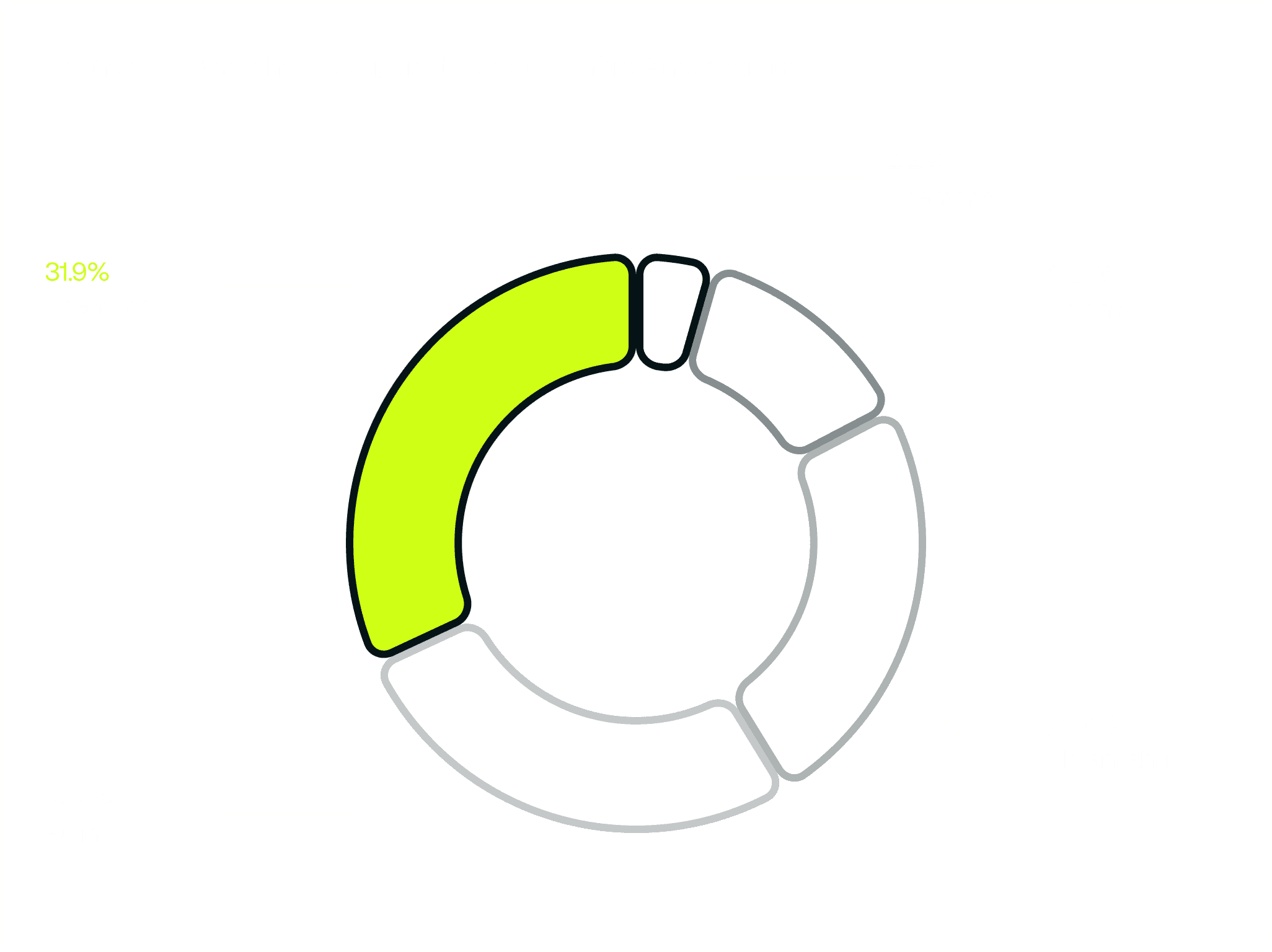
Across world leaders, share-of-voice tilted decisively toward the Iran axis: Khamenei at 31.9%, ahead of Putin (26.8%), Netanyahu (23.9%), Zelensky (12.9%), and Xi Jinping (4.4%). When the most-named leader in global coverage sits at the center of one crisis, the conversation no longer splits evenly across the world’s flashpoints — it has a center of gravity.


Then the foreign story crossed over to the kitchen table.
The most valuable signal was a category crossover. For the first ten weeks of 2026, immigration was the runaway #1 voter issue in spoken media. Iran-driven gas anxiety overtook it in under two weeks — one of the fastest voter-issue shifts Ephemeral has tracked.
Fox News, February 3
What Ephemeral is watching next.
Forward Signals
Iran didn’t fade. It moved to the kitchen table — and Ephemeral heard the turn before it was the only story in the room.


Cases